The most dangerous five feet of your property is the five feet touching your house.
That is not a slogan. It is what post-fire investigators keep finding in the ashes. Most homes lost to wildfire do not burn because a wall of flame arrived at the property line. They burn because an ember — carried sometimes a mile ahead of the fire — landed in bark mulch against the foundation, in a woodpile under the deck, or in dry leaves piled against a wooden fence that ran straight into the siding. The house lights up from a spark the size of a bottle cap.
California has now written that lesson into law.
What Is Zone 0, and What Has to Be Removed?
Zone 0 is the ember-resistant zone: zero to five feet from every structure, including detached garages and sheds. Under the regulation adopted unanimously (8-0) by the state Board of Forestry and Fire Protection, that strip has to contain nothing an ember can ignite.
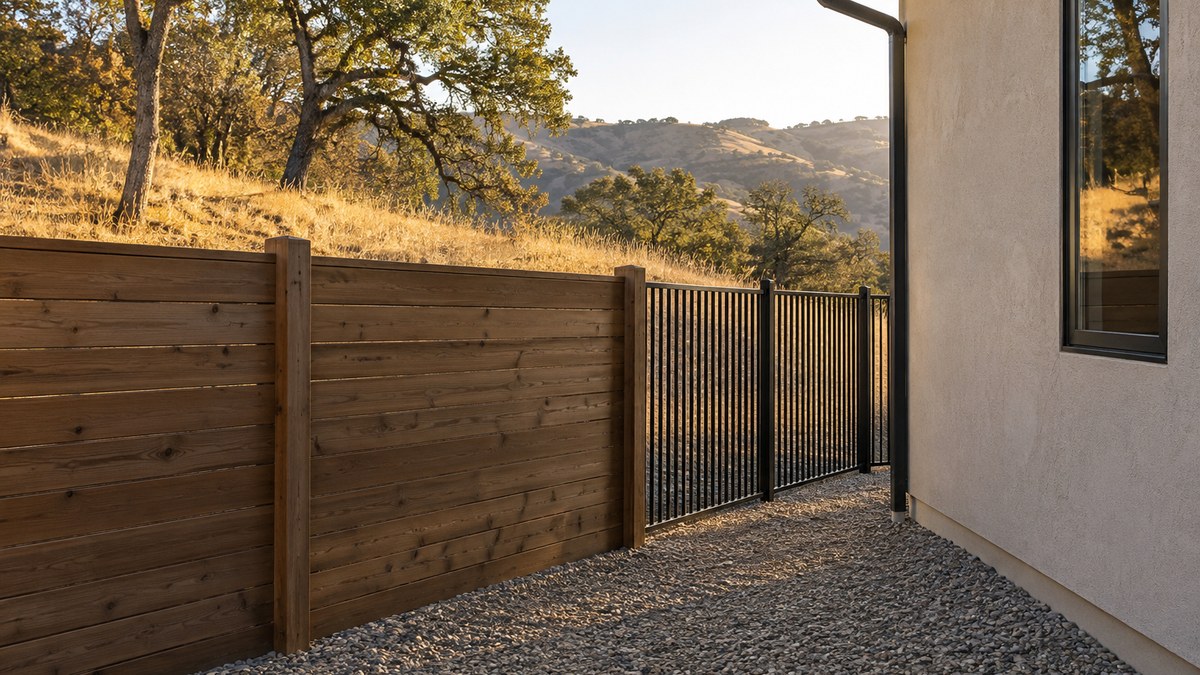
Out: combustible bark mulch, shrubs and plantings against the walls, stored firewood, lumber, trash and recycling bins, patio furniture cushions left against the siding, and combustible fencing or gates attached to the structure. That last one surprises people — the final stretch of a wood fence tied into your wall is a fuse with a handle on it.
In: hardscape, pavers, decorative rock and gravel, bare mineral soil, concrete, and metal transitions where fencing meets the house. Some limited well-irrigated, well-maintained plantings may be treated differently as the rules are finalized, but the safe planning assumption for a foothill home is simple — treat the five-foot ring as hardscape.
Nothing about it is exotic. It is demolition, hauling, and hardscape, plus a few metal parts.
Who Does California's Zone 0 Rule Apply To, and When?
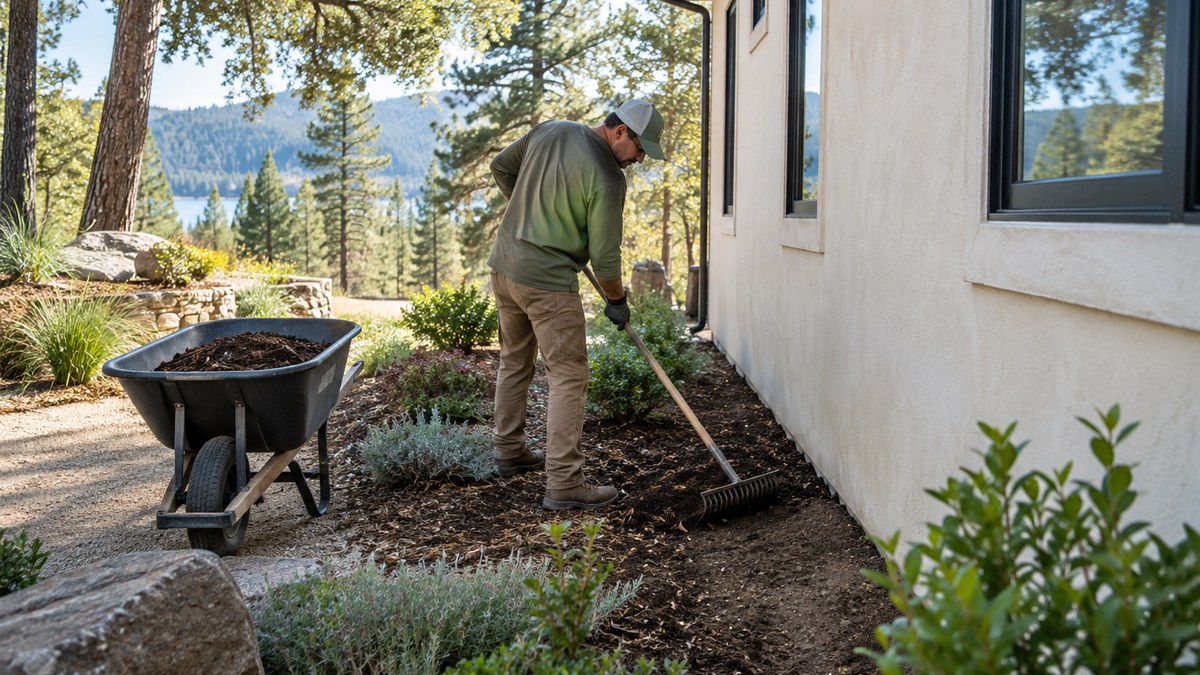
The rule reaches roughly two million California structures in the highest fire-hazard areas. New construction comes first, with existing homes phasing in over the next several years.
If your home sits in a Very High Fire Hazard Severity Zone in the Sierra foothills — Auberry, Prather, Tollhouse, Shaver Lake, North Fork, Coarsegold, Oakhurst, Squaw Valley — assume this is coming to your address. The practical question is not whether, it is whether you do the work on your own calendar or on the state's.
You can check your own parcel in about two minutes. California's Fire Hazard Severity Zone viewer maps every property as Moderate, High or Very High, and that official lookup is the first thing we pull in every wildfire home hardening assessment we run. It matters beyond compliance, because that same zone designation is what drives your insurance rating — and the AB 38 disclosure a seller has to hand a buyer.
Why Should Foothill Homeowners Do Zone 0 Work Early?
Three reasons to move ahead of the phase-in instead of waiting for a deadline letter.
The insurance money starts now. Zone 0 conversion is one of the twelve mitigation actions California requires insurers to discount for under the Safer from Wildfires regulation (Insurance Code §2644.9). The Department of Insurance sets the required discount range at 4% to 40% of the wildfire portion of your premium, largest for the highest-risk homes, and the FAIR Plan publishes up to 16.4% off the wildfire portion for documented mitigation. Do the work this fall and it lands at your next renewal — and every renewal after that. Wait three years and you have spent three years paying full freight for work you were going to be required to do anyway.
The line will be long. When enforcement dates arrive for two million homes, every contractor and landscape crew in the state is booked and rush pricing follows. That is the pattern with every compliance deadline that hits a large population at once.
It is the same work either way. A Zone 0 project done properly touches the structure as well as the ground, because embers attack both. Doing it once — documented — clears the compliance requirement and the insurance checklist in a single project instead of two. See what our foothill hardening packages include.
What Does a Zone 0 Conversion Actually Look Like?
A typical foothill job runs like this.
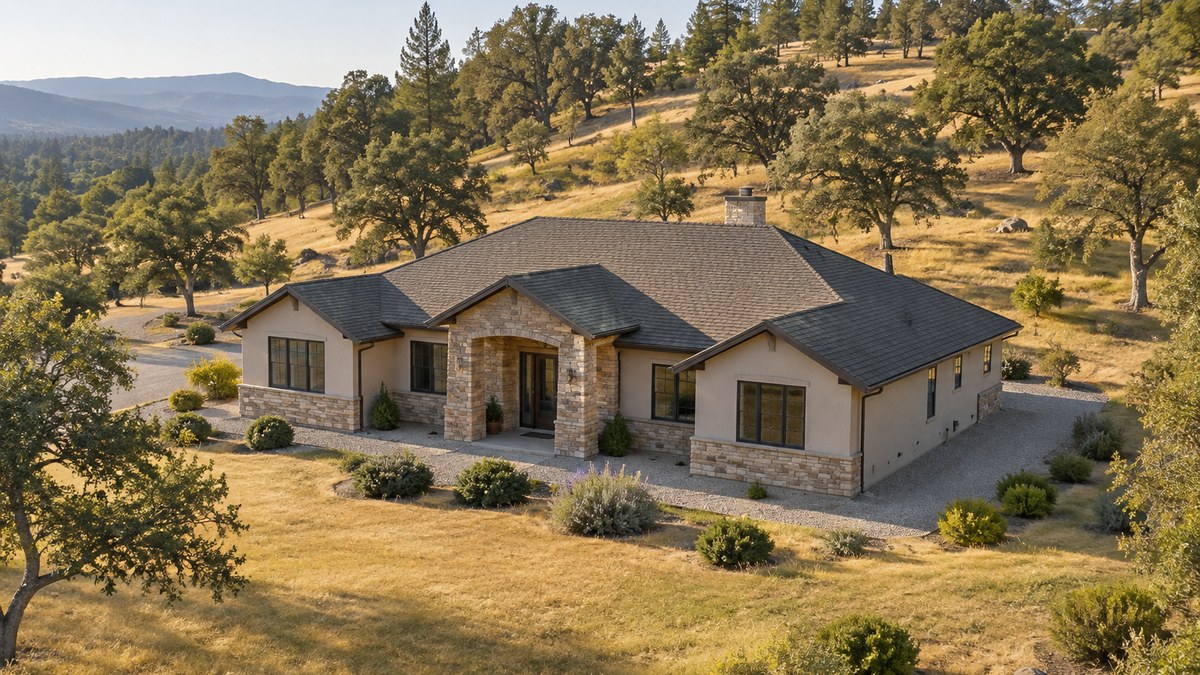
Strip the combustible mulch and plantings out of the five-foot strip and replace them with decorative rock or pavers, graded so water still runs away from the foundation. Swap the last five feet of wood fencing for a metal panel or gate with a noncombustible transition at the wall. Relocate the woodpile and stored combustibles at least thirty feet out. Replace attic, eave and foundation vents with WUI-listed ember-resistant vents — Vulcan vents are the spec we install, because that is the product line the distributors here actually stock and the one underwriters recognize. Add metal gutter guards so needles stop collecting in a trough at your roofline.
For most homes that is a few days on site, not a remodel. In our tiers it is the core of the entry-level Bronze package at roughly $6,000, with Silver (~$18,000) adding eaves, wall base, windows and fencing, and Gold (~$40,000) running the IBHS Wildfire Prepared Home certification path — the standard major carriers are committing to write new policies for. Financing is available through Wisetack ($500–$65,000, 3–120 months, soft-pull prequalification, no credit impact; subject to credit approval, terms vary).
Every project leaves with an Insurance Discount File: dated before-and-after photos, itemized receipts naming the listed products, the parcel's official hazard-zone lookup, a contractor inspection letter, and the twelve-point §2644.9 checklist filled in line by line. The hardware protects the house. The file is what your carrier responds to.
How Does Zone 0 Fit With Zones 1 and 2?
Zone 0 is the new innermost ring in a defensible-space system foothill homeowners already know.
Zone 1 runs from five to thirty feet: lean, clean and green. Spaced plantings, no ladder fuels letting fire climb from grass to shrub to tree, limbs pruned up off the ground and back off the roof, needles and leaves off decks and out of gutters.
Zone 2 runs from thirty to one hundred feet or to your property line: reduced and broken-up fuel, mowed annual grasses, spacing between shrub clusters, downed wood removed.
Those two have been law in State Responsibility Areas for years and CAL FIRE inspects for them. Zone 0 layers a stricter standard over the ring closest to the walls — the ring that decides most outcomes.
Get all three right and you are not just harder to burn. You are the documented, mitigated address an underwriter can justify writing. Book a free 45-minute assessment and we will tell you exactly where your property stands today.
Free 45-minute foothill wildfire assessment
We check your home against the twelve items carriers discount for, and hand you the documentation file.
Book a free assessmentor call (559) 550-6398
Frequently asked questions
What is not allowed in Zone 0 around a California home?
Combustible bark mulch, plants and shrubs against the walls, stored firewood and lumber, trash bins, and combustible fencing or gates attached to the structure. The five-foot ring should be hardscape, pavers, rock, gravel or bare soil, with metal transitions wherever a fence meets the house.
When does California's Zone 0 rule take effect for existing homes?
The regulation applies to new construction first, with existing homes in the highest fire-hazard areas phasing in over the next several years. Because the insurance discount is available immediately, most foothill homeowners are better off completing the work ahead of the enforcement date rather than waiting.
How much does a Zone 0 conversion cost in the Fresno foothills?
Our entry-level package — Zone 0 conversion, ember-resistant vents and gutter guards on a typical foothill home — starts around $6,000, with larger scopes reaching roughly $18,000 to $40,000 as eaves, wall base, windows, fencing and certification are added. Financing is available, subject to credit approval.
Where can I check my home's fire hazard severity zone?
California publishes a statewide Fire Hazard Severity Zone viewer that maps each parcel as Moderate, High or Very High. We pull that official lookup for your address during every assessment and include the printout in your documentation file, because carriers and buyers both ask for it.
Why do homes ignite from embers instead of flames?
Embers travel far ahead of a fire front and only need a receptive fuel bed to start a new fire. Bark mulch, dry leaves, a woodpile or an open attic vent gives them one. Removing those fuels within five feet — and screening vent openings — cuts off the most common ignition path.
Infinite Wildfire Defense is a division of Infinite Home Solutions LLC, CSLB #1126804 (B, C-39), Fresno, CA. We are contractors, not insurance agents. Discounts apply to the wildfire portion of your premium and vary by carrier filing. We document — your carrier decides.