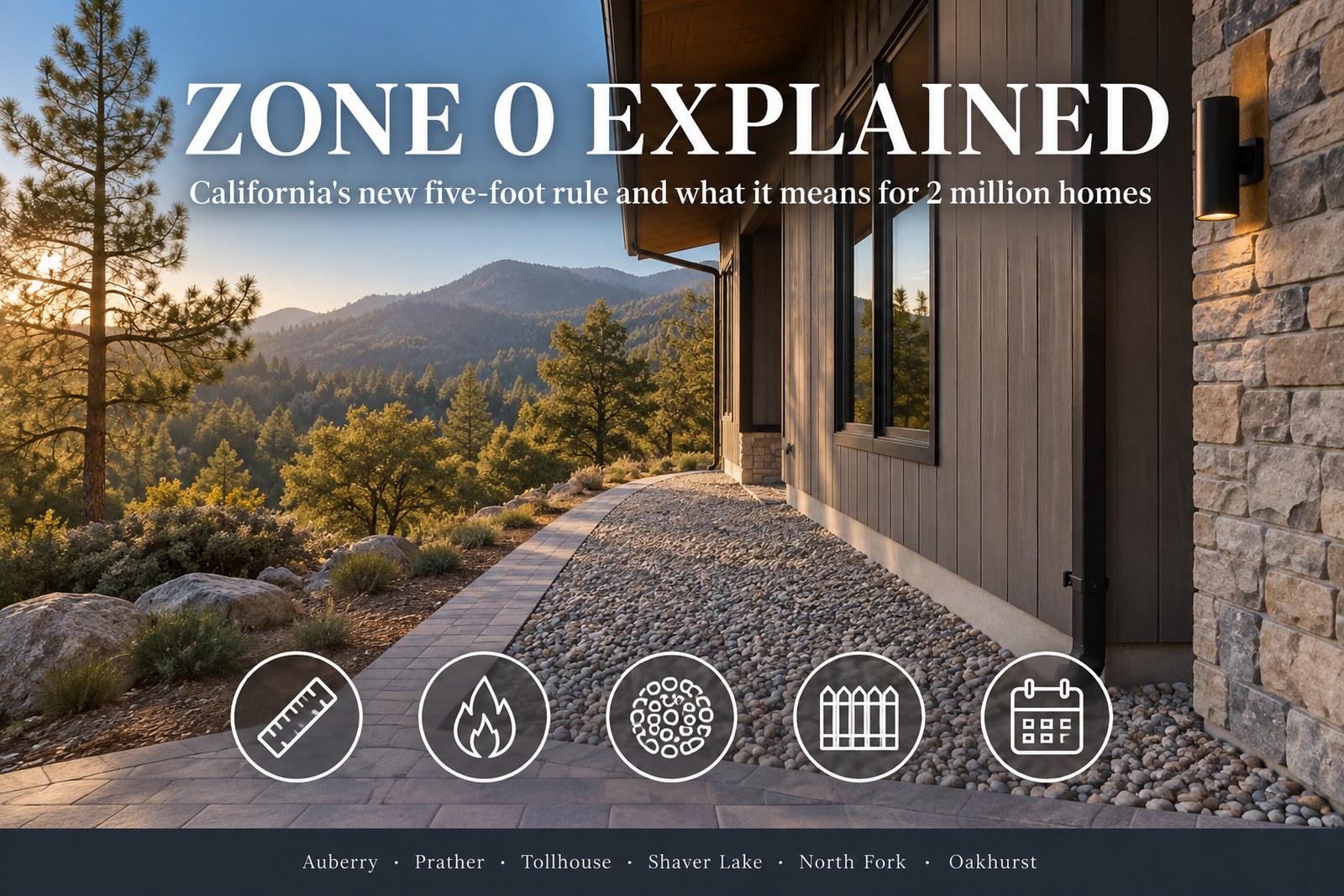
Nobody chooses the FAIR Plan.
You land there when the standard market will not have you, and in the Sierra foothills that has been the story for years. A non-renewal letter shows up, you scramble, and you end up with a FAIR Plan policy plus a companion "wrap" policy that together cost thousands more per year for thinner coverage than the policy you just lost.
Here is what has changed — and why the road back to a standard carrier now runs directly through your house.
Why Are Carriers Writing in the Foothills Again?
Under California's Sustainable Insurance Strategy, carriers that wanted to use modern catastrophe modeling in their rates had to make a trade: commit to writing more policies in the wildfire-distressed areas they had been leaving. Specifically, carriers must write 85% of their market share in distressed areas. That is not a press release. It is written into approved filings at the Department of Insurance.
Mercury was the first carrier approved under the program, committing to add roughly 38,000 policies over the long term — several thousand within the next two years — explicitly in wildfire-distressed areas, and explicitly by moving homeowners off the FAIR Plan. CSAA followed with its own approved filing and its own plan to depopulate the FAIR Plan in a measured way. More are coming, because the cat-modeling trade is the only route carriers have to rates they consider sustainable.
So the door is open again in Auberry, Prather, Tollhouse, Coarsegold, North Fork, Oakhurst and Shaver Lake. But it is a selective door. Carriers are not taking every address back — they are picking the homes that are defensible to underwrite, which means hardened homes with proof.
That is the sentence worth sitting with: "unplaceable" in 2026 usually does not mean unfixable. It means undocumented.
What Does It Take to Harden a Home to Carrier Standards?
The target list is no mystery. It is the same twelve actions the Safer from Wildfires regulation (Insurance Code §2644.9) requires every admitted carrier and the FAIR Plan to discount for.
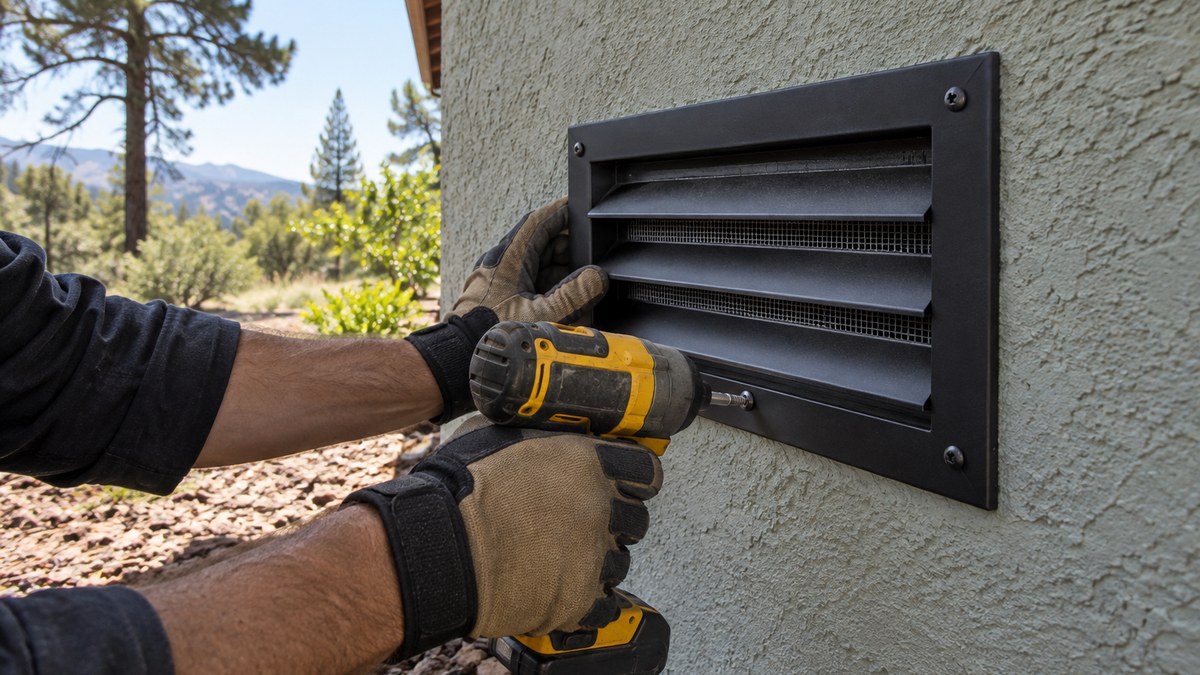
At the structure: a Class A fire-rated roof, ember-resistant vents, enclosed eaves, a noncombustible wall base, upgraded windows. At the ground: the five-foot Zone 0 ember-resistant zone, defensible space maintained out to 100 feet, combustible materials moved off the structure, noncombustible fencing where it meets the house. At the community level: Firewise USA recognition, which credits every home in a participating neighborhood.
Two of those items carry outsized weight with underwriters. The roof, because a wood-shake or aging composition roof in a Very High Fire Hazard Severity Zone is often the single reason a file gets declined — and because we are roofers first, we can tell you in one visit whether yours reads as an asset or a liability. And the vents, because open attic and foundation vents are the most common ember entry point on an otherwise decent house.
For homeowners who want the strongest possible file, there is a named standard carriers publicly trust: the IBHS Wildfire Prepared Home designation — a uniform, verifiable certification, and the standard major carriers are committing to write new policies for. Compare our Bronze, Silver and Gold hardening tiers.
How Do You Document Mitigation So an Underwriter Accepts It?
This is the step almost everyone skips, and it is the reason so much real mitigation earns nothing.
An underwriter cannot see your weekend of brush clearing. A phone call describing it does not move a file. What does move a file is a package built for that reader:
Dated before-and-after photos shot from fixed reference points, so the same corner of the house is recognizable in both frames. Itemized receipts naming the WUI-listed products actually installed — model numbers, not "vents." The parcel's official Fire Hazard Severity Zone lookup. An inspection letter from a licensed contractor attesting to what was installed and how. And the twelve-point §2644.9 checklist completed line by line, including the items your home already passed before we arrived.
Assembled once, properly, that file serves three audiences at the same time. The FAIR Plan, for its own mitigation credit of up to 16.4% off the wildfire portion while you are still there. Any admitted carrier's underwriter, when your broker re-shops you. And a future buyer's lender, when you sell — hardened, documented homes in the foothills are getting easier to finance than their neighbors.
We call it the Insurance Discount File and build it into every tier, because it is the deliverable the money actually responds to.
When Should You Re-Shop Your Policy?
Once the work is done and the file is assembled — not before. A broker shopping you as "the same house, but I hear they cleaned up" gets the same answer as last year.
Take the documentation to an independent broker, ideally one appointed with the carriers carrying depopulation commitments, and ask them to shop you back into the admitted market as a mitigated, documented risk. That phrasing matters. You are no longer the address a model rejected; you are the file a carrier's own growth commitment is hunting for.
Timing notes that matter in practice. Give yourself six to eight weeks between finishing the work and your renewal date so the file lands in time to be rated. Ask your current carrier for your wildfire risk score and appeal it if it is built on conditions you have since removed — that appeal right exists under the regulation. And keep your agent through all of it. This is not a job you take away from your broker; it is a job you hand your broker better ammunition for.
What Is Getting Off the FAIR Plan Actually Worth?
Run your own numbers, because they are specific to your house.
Add what you pay today — the FAIR Plan policy plus the wrap — and compare it with a standard admitted policy on a comparable home. For most foothill homeowners the gap is thousands of dollars a year. Then add the mitigation discounts themselves, in the required 4% to 40% range applied to the wildfire portion, which recur at every renewal rather than once. Then add the part nobody prices: a home that is genuinely far less likely to be lost, and far easier to sell.
Against that, a Bronze package starts around $6,000, Silver near $18,000, Gold near $40,000, with financing available through Wisetack ($500–$65,000, 3–120 months, soft-pull prequalification, no credit impact; subject to credit approval, terms vary).
Hardening is the rare home improvement with a payback schedule written into state regulation. The FAIR Plan was designed as a temporary landing place, not a life sentence — and the exit is made of hardware, paperwork, and one well-armed phone call from your broker. Start with a free 45-minute assessment.

Free 45-minute foothill wildfire assessment
We check your home against the twelve items carriers discount for, and hand you the documentation file.
Book a free assessmentor call (559) 550-6398
Frequently asked questions
Who qualifies to move off the California FAIR Plan?
There is no formal application. Admitted carriers decide, and they are prioritizing homes that meet mitigation standards and can prove it. A Class A roof, ember-resistant vents, a completed Zone 0 zone and maintained defensible space — all documented — is the profile carriers with depopulation commitments are looking to write.
How long does it take to get back to a standard carrier?
The hardening work itself is usually days to a few weeks depending on scope. After that, allow six to eight weeks before your renewal so your broker can shop the file with time to spare. Some homeowners move at their next renewal; homes needing a roof replacement take a season.
What if my home stays on the FAIR Plan after all this?
The work still pays. The FAIR Plan must recognize documented mitigation and publishes up to 16.4% off the wildfire portion of a dwelling-fire premium. You keep that credit while you are there, and your file is already assembled for the next carrier that opens capacity in your ZIP.
Why does documentation matter more than the work itself to an insurer?
Because underwriting is a paper process. The work protects your home from fire; the documentation is the only thing an underwriter two hundred miles away can evaluate. Undocumented mitigation is invisible to rating, which is why so many homeowners do real work and see no premium change.
Where does Infinite Wildfire Defense work?
We operate out of Fresno and serve the Sierra foothill corridor — Auberry, Prather, Tollhouse, Shaver Lake, North Fork, Coarsegold, Oakhurst, Squaw Valley, Friant and Mariposa — plus the wider Central Valley and Bay Area for roofing. Assessments are free, on site, and take about 45 minutes.
Infinite Wildfire Defense is a division of Infinite Home Solutions LLC, CSLB #1126804 (B, C-39), Fresno, CA. We harden and document homes; we do not sell insurance, and placement decisions belong to carriers and your broker. Discounts apply to the wildfire portion of your premium and vary by carrier filing. We document — your carrier decides.